Building the technology backbone for housing justice.
Critical housing decisions are made with fragmented information, data that's dark and an uneven technology playing field. We're fixing that.
Mountain View Pilot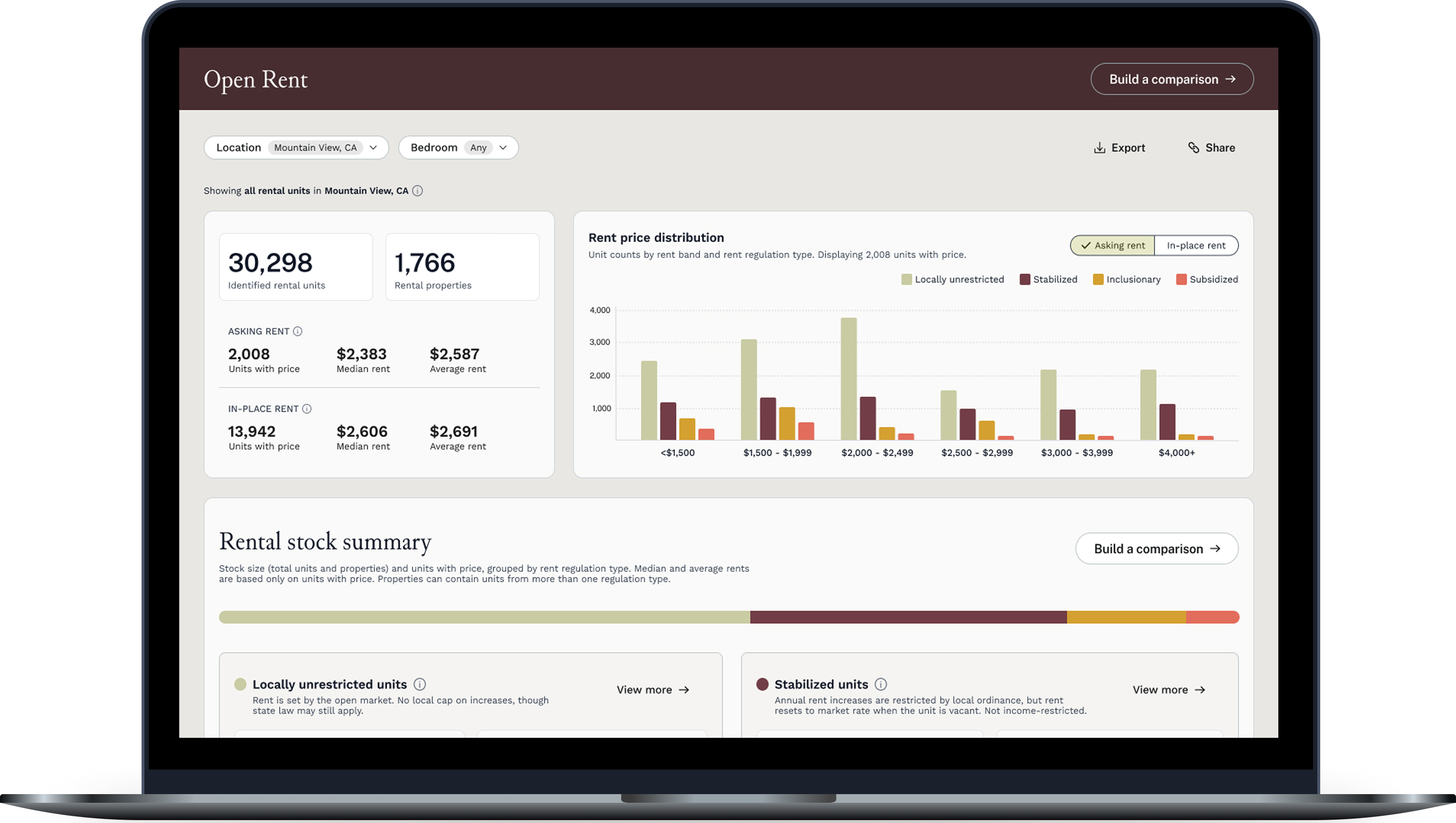
Open Rent is building a new type of housing data and technology infrastructure
We work with local partners to collect, clean, and integrate disparate datasets such as parcel and assessor records, rent registries, ownership, and active market listings into a single platform. This technology backbone enables our partners to build tools and applications aimed at making housing more stable and equitable.
When cities can see their full rental market clearly, they can act precisely, fund programs smarter, and build policy that actually works.
The Open Rent Initiative is a nonprofit venture founded by Citizen Codex and is fiscally sponsored by the PSL Foundation. Our first pilot launched in summer 2026 with Mountain View, CA, built in close partnership with the city's housing department.
Want Open Rent in your city? Get in touch.
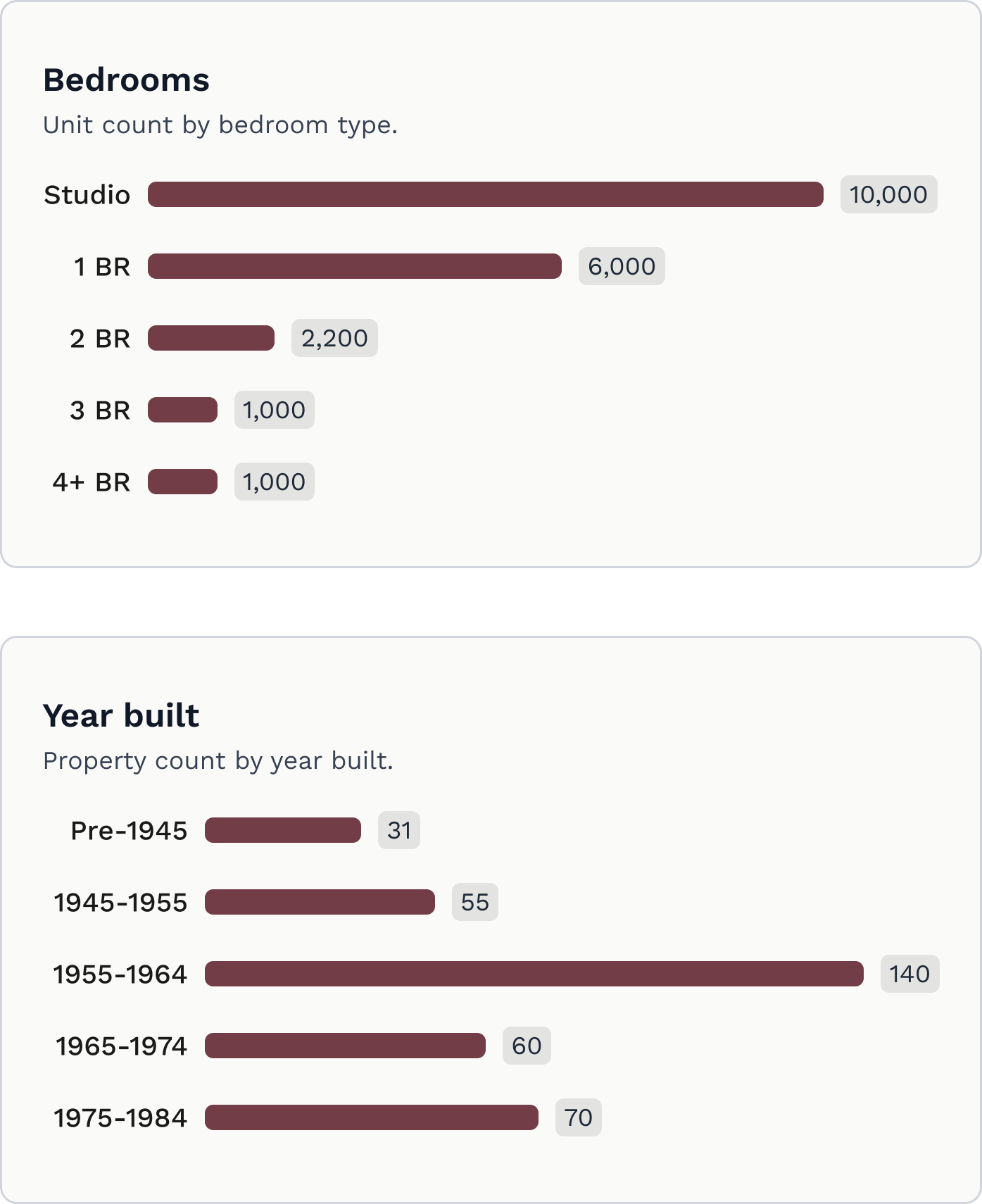
From scattered records to a
city that can see clearly
Every data point in Open Rent is labeled with its source, how it was collected, and when it was last updated. Every tool is governed by the partner(s) engaged in building that tool. To explore more on what technology we apply and our data approach, review our full methodology.
We aggregate
Parcel and assessor records, state/federal housing data, ownership information, rent registries, market listings and secure data from partners — gathered from dozens of sources.
We integrate
Data is cleaned, matched, and unified into a single property-level dataset with lineage and versioned pipelines. Data is tiered and gated based on security requirements to enable both open and secure use.
Decision makers act
Partners and the public are able to access data either through the open data portal or through secure, custom built tools and apps to enable workflows, research and/or policy decisions.
Advisors & team
Supporters & partners
Open Rent is a 501(c)(3) nonprofit project, fiscally sponsored by the Policy Simulation Library Foundation. Our work is made possible by early funders committed to transparent, public-good data infrastructure.
We're building an ecosystem of data and civic partners, teaming up with organizations working to make housing more equitable and stable.


What led us here
Methods
How Open Rent builds its rental housing data
A guide to the sources, classifications, and rent figures behind Open Rent, and what the data can and cannot tell us.
Read the articleResearch · Citizen Codex
Rent Madness: Why is America's Rental Data So Bad?
The report that started it all. A deep look at why rental data is fragmented, stale, and inaccessible, and what it costs us as a country.
Read the reportResearch · Citizen Codex
How We Used Geospatial Analysis to Understand St. Paul's Rental Market
How geospatial analysis helped map St. Paul's rental market neighborhood by neighborhood, and what it revealed about the limits of conventional data sources.
Read the reportThe rent data problem
is too big for any one organization to solve
We're raising multi-year support to expand from our current pilot phase. If you're interested in helping grow the work of the Open Rent Initiative, we are excited to chat!
Collaboration can take many shapes, from partnering on building a comprehensive view of the rental market for your community, a tool to support an important workflow like finding preservation opportunities, or tackling a research question like identifying single family rentals.